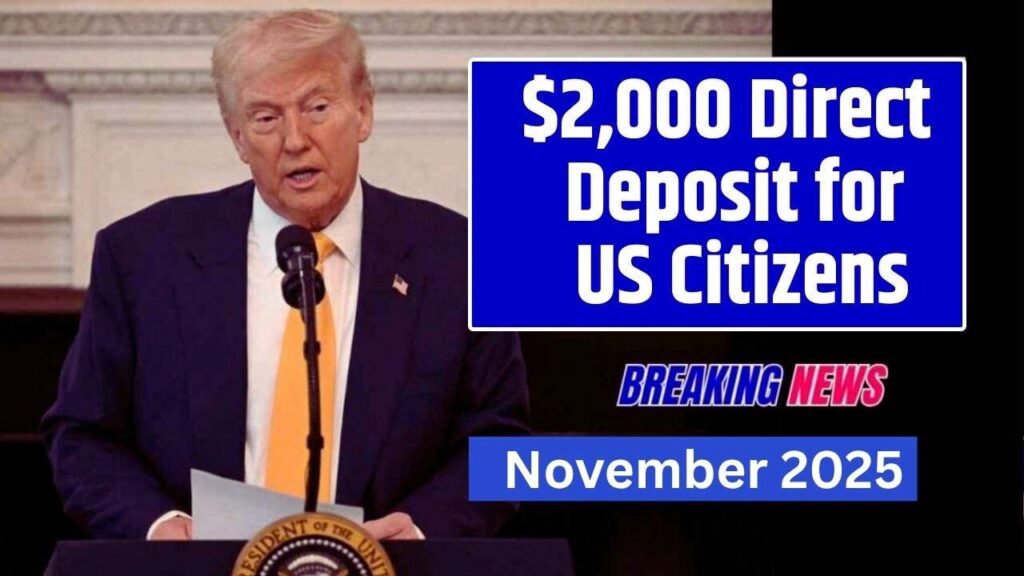
Big Relief Plan for Americans in Discussion
A new proposal about a $2,000 direct deposit for US citizens is creating a lot of buzz across the country. Many people are wondering if they will receive this payment and when it might arrive. According to early reports, the plan aims to provide financial help to millions of Americans struggling with rising costs of living, groceries, and fuel. Though this payment has not been officially confirmed by the government yet, the idea has gained strong attention because it could bring much-needed relief to families.
What the $2,000 Direct Deposit Is About
The proposed $2,000 payment is said to be a one-time financial support from the federal government. Some sources suggest it might be funded through tariff revenues or an updated relief program similar to past stimulus payments. The goal is to help low and middle-income citizens who continue to face economic pressure after inflation and higher interest rates. However, officials have not yet released an official statement confirming when or how these payments will be distributed.
Who Could Be Eligible
If this plan gets approved, eligibility is expected to depend on income and tax status. People with lower or moderate incomes will likely qualify first. Reports indicate that individuals earning below $75,000 per year and families earning under $150,000 may receive the full amount. Those who earn above that range might get a reduced payment. US citizens and permanent residents with valid Social Security numbers will be eligible, while non-filers or dependents could have to apply separately once the IRS provides instructions.
Here is a short summary of the possible eligibility:
| Category | Requirement |
|---|---|
| Citizenship | US Citizen or Legal Resident |
| Income Limit | Below $75,000 (single) / $150,000 (joint) |
| Tax Filing | 2024 Tax Return Required |
| Payment Type | Direct Deposit or Paper Check |
Payment Dates and IRS Instructions
As of now, the IRS has not issued any official payment schedule. But if the proposal moves forward, the first phase of payments is expected to begin in early 2025, followed by additional rounds later in the year. The IRS is likely to use the same system it used during previous stimulus checks, where payments were sent directly to bank accounts based on the tax records on file. People who have not updated their direct deposit details or who filed taxes late may receive physical checks by mail.
To prepare for this, citizens are advised to ensure that their tax information and bank details are up to date. Those who do not file taxes should keep an eye out for IRS announcements regarding non-filer registration portals, similar to earlier relief programs. It’s also important to stay alert for scams — the IRS never contacts taxpayers through calls, texts, or emails to ask for personal or bank details.
Why This Payment Matters
For many American households, the cost of daily living has increased sharply. Rent, food, and medical expenses continue to rise faster than wages. The $2,000 direct deposit proposal aims to give families some breathing space and help them manage their essential expenses. Economic experts say that while a one-time payment may not solve long-term inflation issues, it can provide short-term relief and help boost local spending.
Final Words
The $2,000 direct deposit payment for US citizens is still under discussion and not yet an official program. While the plan sounds promising, it’s wise to wait for confirmation from the IRS or the Department of Treasury before making any financial decisions. For now, people should focus on keeping their tax filings updated and follow only trusted government sources for news. If approved, this program could be one of the biggest financial support measures in 2025, bringing hope and relief to millions of Americans facing tough economic times.