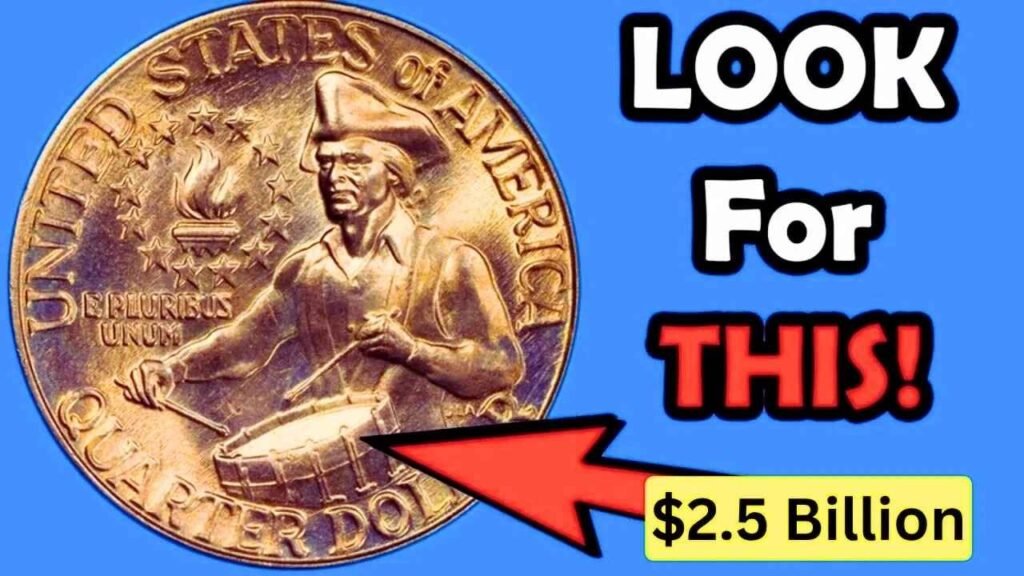
Social media is blowing up again with wild stories about a 1976 Bicentennial quarter worth a mind-blowing $2.5 billion, supposedly still floating around in everyday change. Folks are digging through jars and wallets, dreaming of instant riches from a coin with a drummer boy on the back. But before you quit your job, let’s get real this tale has been circulating for years, sparking treasure hunts across America. It’s the kind of story that sounds too good to be true, and guess what? It mostly is. Experts and fact-checkers are calling it straight-up hype, but there are some legit valuable versions out there worth checking for.
The Coin Everyone’s Talking About
Back in 1976, the U.S. Mint cranked out over 1.6 billion special quarters to celebrate America’s 200th birthday. These have George Washington on the front and a cool colonial drummer plus torch on the back, with “1776-1976” dates. No regular 1975 or 1976 quarters exist this was it. Most were made from copper-nickel, like today’s quarters, and they’re super common. You probably have a few in your couch cushions right now, worth exactly 25 cents.
The billion-dollar buzz? It pops up on shady websites and viral posts claiming a super-rare error coin slipped into circulation. Tales talk about weird metal mixes, double strikes, or one-of-a-kind flaws making it priceless. Some say it was found in a California shop or has secret markings. But no auction house, museum, or expert has ever seen or sold anything close to that.
Why the $2.5 Billion Claim is Total Nonsense
Straight talk: No coin in history has sold for billions, let alone a quarter. The priciest U.S. coin ever? A 1933 Double Eagle gold piece at $18.9 million. Bicentennial quarters top out way lower. That insane number seems to come from clickbait sites pumping fake news for clicks, often copying each other. It’s a classic internet hoax, like those “lost treasure in your attic” scams.
These stories mix a tiny bit of truth like real errors existing with wild lies to go viral. Coin pros from PCGS and NGC say they’ve graded millions of these, and nothing hits even millions, forget billions. If it was real, it’d be front-page news everywhere, not buried on random blogs.
What These Quarters Are Actually Worth
Most Bicentennial quarters? Face value. But some special ones fetch real money at auctions. Silver versions from collector sets (with an “S” mint mark and no copper edge) go for $5 to $20 in good shape. Pristine errors or high-grade proofs? Hundreds or thousands.
Here’s a quick look at real top sellers:
| Type/Example | Real Auction Price | Why It’s Valuable |
|---|---|---|
| 1976-S Silver Proof (MS69) | Up to $19,200 | Perfect condition, 40% silver |
| 1976-D Doubled Die (MS66) | Around $8,400 | Clear doubling on letters |
| Off-center strike error | $500-$2,000 | Mint goof makes it unique |
| Regular circulated | 25 cents | Super common |
The record is that $19,200 silver one impressive, but no billionaire status.
How to Check If Yours is a Winner (or Not)
Grab a magnifying glass and look close. Weigh it silver ones are heavier (about 5.75 grams vs. 5.67). Check for “S” mint mark, weird doubling, or off-center designs. No mint mark means Philadelphia, “D” is Denver both usually cheap unless flawless.
If it looks special, don’t clean it! Take it to a pro grader like PCGS. Apps or online tools can help spot fakes. And watch out scammers sell “rare” fakes online.
The Real Treasure: Fun History, Not Fake Fortunes
These quarters are cool pieces of 1970s America parades, fireworks, and patriotism. Collecting them is a fun hobby that might net you a few bucks, not billions. The hoax keeps tricking people, but smart folks know better. Next time you get one in change, smile at the history, spend it, or save it for the grandkids. Just don’t bet the house on it making you rich overnight.