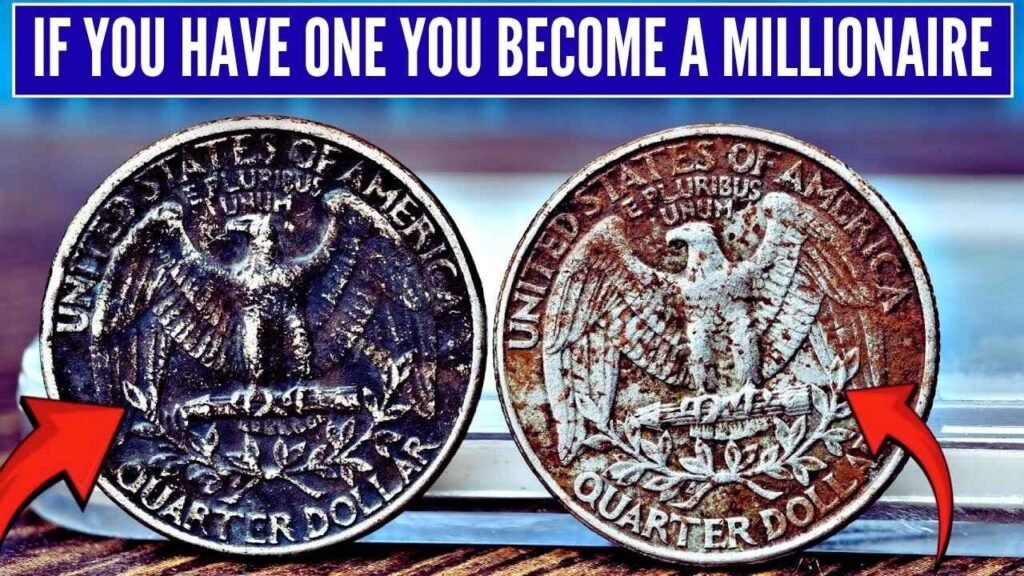
Many people overlook old, worn, or dirty quarters, assuming they are worthless. But some Washington quarters often found looking dull, scratched, or covered in dirt can actually be worth big money. These rare coins become valuable because of minting mistakes, silver content, and unique varieties that collectors love. This article explains the top five rare dirty quarters you should always double-check before spending.
Why Dirty Quarters Can Still Be Valuable
A coin’s appearance does not determine its worth. Even a dirty or stained quarter can be extremely rare underneath the grime. Factors that make a quarter valuable include:
- Silver composition
- Major minting errors
- Low-mintage dates
- Unique design varieties
- Historical importance
This means a quarter that looks like junk could actually be a collectible treasure.
1. 1965 Silver Error Washington Quarter
One of the most famous modern errors. Even a dirty or worn example can be worth a lot because it was mistakenly struck on a silver planchet. Since quarters were no longer supposed to contain silver after 1964, this rare mistake makes it extremely valuable. These often show up looking plain and dull, but collectors pay premium prices once identified.
2. 1983 “Spitting Eagle” Error Quarter
Many of these coins circulate looking dirty or damaged, but the error is still visible. A die crack under the eagle’s beak creates the illusion of the eagle “spitting.” Collectors love this unique mistake, and even very worn ones can bring strong value. This is one of the easiest valuable errors to find in pocket change.
3. 2004-D Wisconsin Extra Leaf High Quarter
This quarter is known for having an extra leaf on the corn either high or low. Most people who found these discovered them in heavily circulated, dirty condition. Even so, these error coins sold for big money. Because many of them look like ordinary state quarters, they often go unnoticed.
4. 1999 Delaware “Spitting Horse” Error Quarter
This popular error features a die crack that makes the horse look like it’s spitting. The error appears clearly even on dirty or scratched coins. Many of these circulate heavily, making them common to find in poor condition. Despite the wear, collectors still pay well for this dramatic variety.
5. 1970-S Washington Quarter Struck on a Foreign Coin
This is one of the rarest quarter errors ever discovered. Some were struck on the wrong metal from foreign coins, which often gives them a darker, dirtier, or unusual appearance. Because these coins look strange in both color and weight, many people overlook them. But once identified, they can be extremely valuable.
How to Check a Dirty Quarter for Value
A coin doesn’t need to look new to be rare. You can check your quarters by looking for:
- Unusual weight or metal color
- Odd lines, cracks, or doubling
- Strange marks near the eagle or state designs
- Extra leaves or unexpected details
- Missing or distorted mint marks
A magnifying glass can help, but most major errors can be spotted with the naked eye.
The Role of Condition in Value
While clean and sharp coins usually sell for more, error coins and rare varieties still hold value even when dirty. A dramatic error matters more than a shiny surface. Collectors care more about the uniqueness of the mint mistake than the cleanliness of the coin.
Why Dirty Quarters Get Overlooked
Many people assume that only clean or shiny coins are worth money. But rare quarters often circulate for years, picking up:
- Dirt
- Scratches
- Discoloration
- Wear
- Stains
This is why so many valuable quarters go unnoticed in everyday change.
Should You Clean a Dirty Coin?
No. Cleaning coins can damage their surface and reduce their value. It’s better to leave them as you found them and let a professional evaluate them if needed.
Conclusion
Dirty quarters are often ignored, but some of them can be worth a surprising amount of money. Rare errors, silver planchets, and unusual varieties can hide beneath years of wear. Before spending a grimy quarter, take a moment to inspect it you might be holding a valuable piece of U.S. coin history.
FAQs
Q1. Can a dirty quarter still be valuable?
Yes. Rare errors and special varieties can be worth money even in poor condition.
Q2. Should I clean a dirty rare quarter?
No. Cleaning can lower the value and damage the coin.
Q3. What is the easiest dirty quarter error to spot?
The “Spitting Eagle” and “Spitting Horse” errors are very noticeable.
Q4. Can rare quarters still be found in circulation?
Yes. Many people unknowingly spend valuable quarters every day.