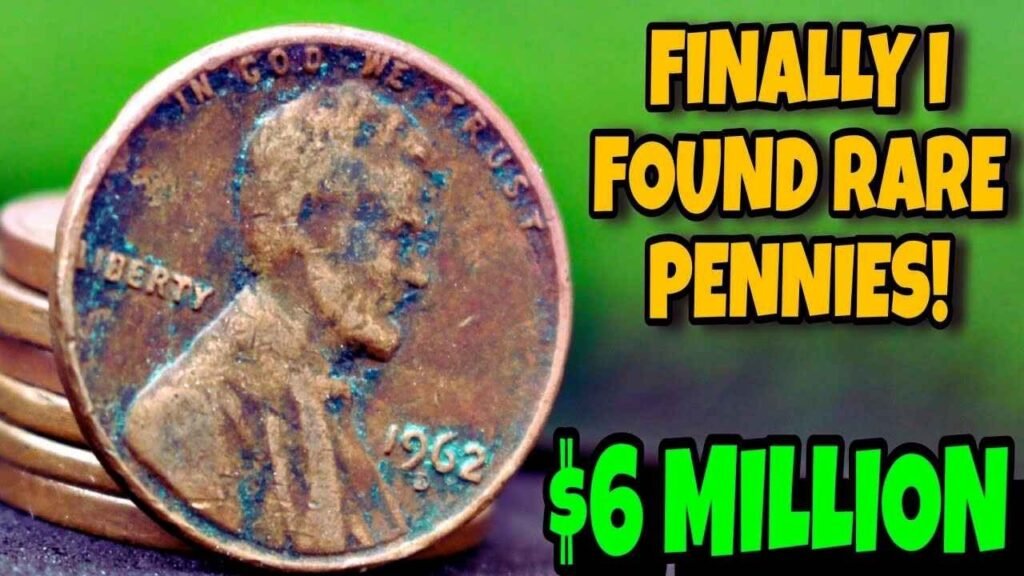
Most people ignore old, dirty pennies lying around the house, but some of them could actually be worth a small fortune. These rare coins often hide in plain sight, mixed with everyday pocket change. Here’s a complete breakdown of which pennies to look for and why collectors pay big money for them.
Why Old Pennies Can Be Valuable
Many pennies become valuable because of limited production, minting mistakes, or unique metal compositions.
Even the dirtiest coin can hold surprising value if it carries the right features.
Collectors hunt for pennies with:
- Rare mint errors
- Low mintage years
- Special metal types
1943 Steel Penny – The Wartime Rarity
In 1943, copper was needed for World War II, so the U.S. Mint made pennies from steel coated in zinc.
Most are common, but a few rare versions were accidentally made using copper, making them extremely valuable.
If you find a brown 1943 penny instead of a silver-colored one, it could be worth a lot.
1955 Double Die Penny – A Collector Favorite
The 1955 Double Die penny is one of the most famous error coins in U.S. history.
Its letters and numbers show a clear doubling effect that’s easy to see without special tools.
This error makes the coin highly desirable and worth far more than its face value.
1969-S Double Die Penny – A Rare Hidden Treasure
Another valuable coin is the 1969-S Double Die.
This penny has strong doubling on the words “LIBERTY” and “IN GOD WE TRUST.”
Because only a small number were released, finding one in pocket change is incredibly lucky.
1972 Double Die Penny – More Than Just a Small Error
The 1972 penny has several versions of the double die error, with the most valuable showing strong doubling on the date and lettering.
This penny is often overlooked because it looks normal at first glance, but a closer look could reveal a hidden prize.
1983 Double Die Reverse – Worth Checking Every Time
In 1983, a double die appeared on the reverse side of the penny.
The words and design appear doubled when inspected closely.
Collectors pay high prices for clean examples, even when they look old and worn.
1992 Close AM Penny – A Rare Modern Find
Some 1992 pennies show a mistake where the letters “A” and “M” in “AMERICA” appear too close together.
This tiny detail makes the penny extremely rare.
Even a dirty or circulated one can be worth far more than a regular coin.
2000 Wide AM Penny – Easy to Miss but Valuable
In 2000, a reverse design mix-up created pennies where the “A” and “M” in “AMERICA” appear farther apart.
This variation is easy to miss unless you know what to look for.
Collectors love these small differences, making the coin much more valuable.
Why You Should Check Your Change
These rare pennies often show up in everyday places—pockets, drawers, old jars, or inherited collections.
Many people throw them away or ignore them because they’re dirty or worn, but that’s exactly where valuable coins hide.
A quick inspection can turn a simple penny into a surprising payout.
Conclusion
Old dirty pennies may look worthless, but some of them can be worth hundreds or even thousands of dollars. By knowing what to look for—like rare dates, mint errors, and special designs—you can easily spot valuable coins in your everyday change. The next time you come across a dusty old penny, don’t ignore it. It might just be more valuable than you think.
FAQs
Q1. Are dirty pennies still valuable?
Yes, even dirty or worn pennies can be valuable if they have rare features or errors.
Q2. What is the most valuable penny to look for?
The 1943 copper penny and major double die pennies are among the most valuable.
Q3. Do I need tools to identify rare pennies?
Most valuable pennies can be identified with the naked eye, though a magnifying glass helps.
Q4. Can modern pennies also be valuable?
Yes, rare versions like the 1992 Close AM and 2000 Wide AM pennies can be worth good money.
Q5. Where can I find valuable pennies?
You can find them in pocket change, old jars, coin rolls, or inherited collections.