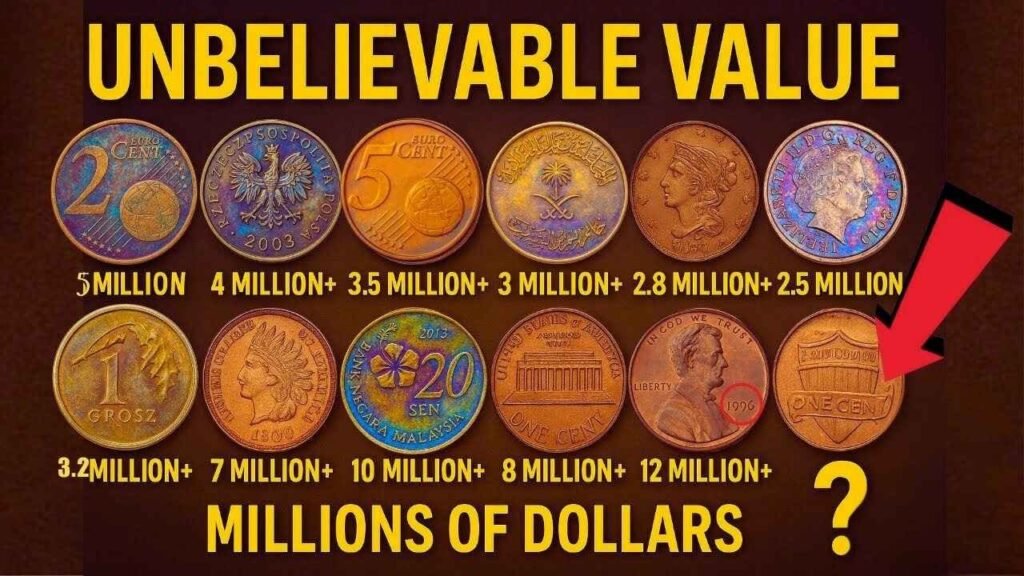
A growing band of collectors and treasure hunters are scanning estates, old coin jars, and attic boxes in search of coins that can change lives. In 2025, a handful of American issues still top the “holy grail” lists pieces so rare and historically important they regularly fetch millions at auction. Below is a clear, easy guide to the five ultra-rare American coins that matter most to serious collectors right now, how to spot them, and what to do if you think you’ve found one.
What makes a coin “ultra-rare”?
Ultra-rare coins are defined by extreme scarcity, strong historical significance, and a clean chain of ownership that appeals to top collectors and institutions. Condition (grade) matters more than face value: a well-preserved example can be worth exponentially more than one in poor condition. Provenance and auction records push prices into the millions.
1) 1933 Saint-Gaudens Double Eagle the pinnacle
The 1933 Double Eagle is the most famous modern U.S. rarity. Almost every example was supposed to be melted after gold ownership rules changed; a very small number survived and became the subject of legal battles and headlines. One example sold for roughly $18.9 million at auction, cementing its place as the single most valuable U.S. coin in modern times. If you encounter a 1933 Double Eagle, treat the find like immediate high-value evidence and contact professionals.
2) 1794 Flowing Hair Silver Dollar the first dollar and a record setter
The 1794 Flowing Hair dollar is prized because it’s among the earliest U.S. silver dollars and may include some of the first dollars struck by the young Mint. The finest specimens have sold for ten-figure prices, with auction records pushing past $10 million for the most important examples. The coin’s historical status (and rarity) keeps it squarely on every top-five list.
3) 1804 Draped Bust Silver Dollar the “King of American Coins”
Known as the “King of American Coins,” the 1804 dollar is a near-legendary rarity: only a handful of verified specimens exist, and several famous examples have changed hands for millions. Auction records for top specimens reached multimillion totals in recent major sales, and new discoveries or high-grade offerings quickly become headline news.
4) 1787 Brasher Doubloon a founding-era gold rarity
The Brasher Doubloon predates the U.S. Mint and was privately struck in 1787 by Ephraim Brasher, a New York goldsmith. Its historical role in early American commerce and its extreme scarcity make it one of the most sought-after American gold coins. Individual specimens have topped multi-million dollar prices at auction and private sale, especially when the piece has a clear provenance.
5) 1913 Liberty Head Nickel the outlaw nickel
Only five confirmed 1913 Liberty Head nickels are known to exist. They were not officially authorized by the Mint, which adds to their intrigue and value. When these nickels come to market they command prices in the multi-millions, and several high-profile sales and private deals in the last two decades underline their status as one of the rarest U.S. coins collectors chase.
How treasure hunters actually find these coins
Finding an ultra-rare coin is rare, but these practices increase your chances:
- Inspect old coin collections, estate boxes, and jewelry-box stashes carefully.
- Learn to read mint marks, dates, and subtle design differences.
- Check for oddities: mismatched dates, unusual edges, or unexpected weight.
- When in doubt, don’t clean the coin cleaning destroys value.
Be realistic: most great finds are discovered by experienced dealers, museum curators, or heirs who kept coins in original holders.
How to verify and protect a potential discovery
If you believe you’ve found a major rarity, follow these steps:
- Photograph the coin with good lighting and scale.
- Do not polish or alter it.
- Use a reputable local dealer or regional numismatic expert for an initial look.
- For high-value candidates, send the piece to a top grading service (PCGS or NGC) for authentication and grading.
- Consider getting legal advice on ownership if the piece may have complicated provenance.
Authentication and third-party grading are essential: they materially affect sale price and market trust.
Risks and realistic expectations
Hunting for hidden treasures is exciting, but it’s also risky. Counterfeits and altered coins are common at the high-end, and emotional attachment can lead to mistakes. Even when genuine, many of these coins only reach top prices because of provenance stories, auction competition, or museum interest not just intrinsic rarity. Plan for expert fees, grading costs, and possible legal research.
Conclusion
The five coins above the 1933 Double Eagle, 1794 Flowing Hair dollar, 1804 Draped Bust dollar, 1787 Brasher Doubloon, and the 1913 Liberty Head nickel remain the headline grabbers in 2025. They combine deep historical importance, extreme scarcity, and auction records that push into the millions. If you’re hunting for hidden treasures, educating yourself about appearances, provenance, and authentication is the fastest way to turn a curious find into a serious discovery.
FAQs
Q: Which coin is the single most valuable U.S. coin today?
A: The 1933 Saint-Gaudens Double Eagle holds the auction record and is widely regarded as the single most valuable U.S. coin in recent sales.
Q: How likely is it that a jar of old coins contains a million-dollar coin?
A: Extremely unlikely. Most high-value coins are found in well-documented collections, estate consignments, or museum deaccessions not random loose change.
Q: What should I do if I think I have one of these coins?
A: Photograph it, avoid cleaning it, and contact a reputable coin dealer or a professional grading service (PCGS/NGC) for authentication.
Q: Do auction records change often?
A: Yes. Major sales, newly discovered specimens, and high-profile private deals can reset price records, so auction results are worth watching.
Q: Can a coin’s value be ruined by improper handling?
A: Absolutely. Scratches, cleaning, or removing patina can reduce value dramatically. Always handle coins carefully and get expert advice before any restoration.